
Stories Between History and Myth
Cartes Postales from GreeceThis thread follows the book’s repeated blending of historical events, local belief, and mythic retelling, leaving readers to weigh what can be known.
increasing Bearing strength in each event
 decreasing
Bearing strength in each eventdecreasingA Storyteller’s Caveat

A Storyteller’s Caveat
Stories arrive as gifts
Anthony records accounts told by strangers in cafes and villages. Some may be true, others exaggerated or invented, and he openly leaves the judgment to his intended reader.
Uncertainty becomes part of the form
The stories matter not only as factual reports but as expressions of a community’s fears, loyalties, and memories. Anthony’s notebook preserves voices without claiming that every detail can be verified.
The novel asks readers to attend to the meaning of storytelling as well as to its accuracy.
A Jilted Groom’s Legend
A Jilted Groom’s Legend
A local account of vengeance
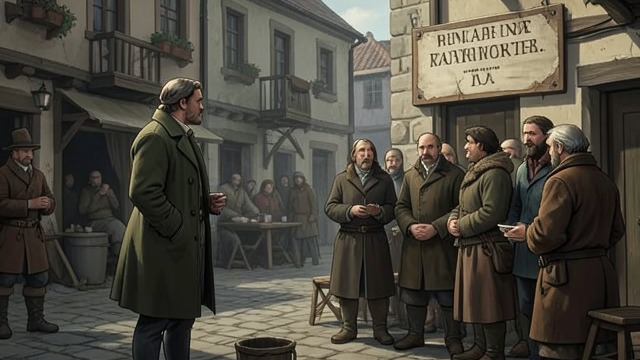
A couple tells Anthony about Akis Adamakos, whose bride fled before their wedding. The tale connects a personal humiliation to the Maniot tradition of blood feuds.
The story reflects the listener
Anthony recognizes the irony of hearing about a jilted man while grieving his own abandonment. He does not claim to know every fact, but uses the tale to examine the cost of vengeance.
History, rumor, and personal reflection become inseparable within the account.
Byron Between Record and Belief
Byron Between Record and Belief
Competing explanations
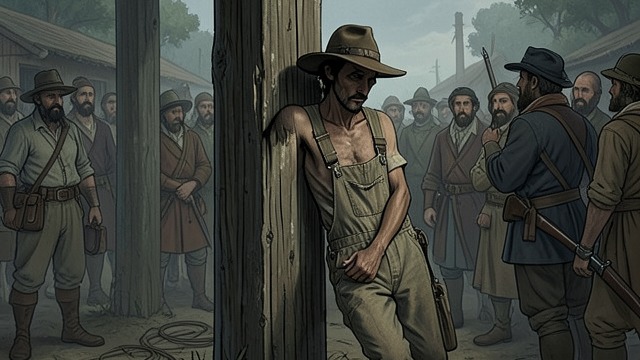
Anthony hears a local servant’s belief that admiration brought Byron the evil eye, alongside more familiar medical theories about his death. Neither explanation fully resolves the mystery.
A hero revised
He also learns that Greeks honor Byron despite the fact that he never fought in their war. The public legend simplifies a life marked by sickness, desire, and disappointed love.
The account keeps historical memory alive while showing how myth can reshape it.
A Myth Told as Eyewitness Memory
A Myth Told as Eyewitness Memory
A storyteller claims presence
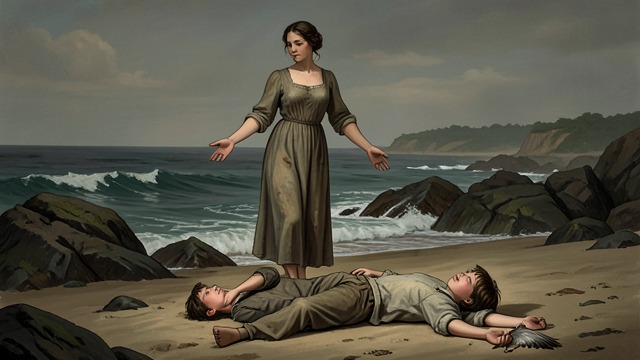
Ariadne tells tourists that she witnessed Daedalus and Icarus fly over the island. She recounts the boy’s fatal ascent and the father’s grief as if describing a recent event.
Legend becomes human grief
Her version gives the familiar myth a witness who cared for Icarus’s body and promised to tend his grave. The story’s emotional truth rests on the bond and loss, not on historical proof.
Ariadne’s performance makes the boundary between myth and lived memory deliberately porous.
The Listener Becomes Part of the Story
The Listener Becomes Part of the Story
A myth changes the present
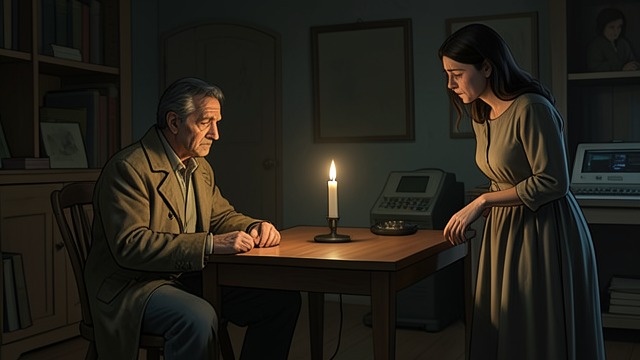
Anthony hears Ariadne say that time eventually healed Daedalus’s grief and that it is working for him too. He had not told her the details of his own loss.
Belief opens a future
He cannot explain her insight, but accepts that the story has reached him at the right moment. The ancient myth gives language to the possibility of continuing after bereavement.
Storytelling crosses eras by making one person’s remembered loss speak to another’s current life.
Anthony’s first months on the road
Anthony’s autumn visit to Nafplio
Anthony’s winter stay in Messolonghi
Anthony’s summer visit to Ikaria
The end of Anthony’s stay on Ikaria
